Ghost Towns With Wi-Fi: The People Still Haunting Dead Internet Forums
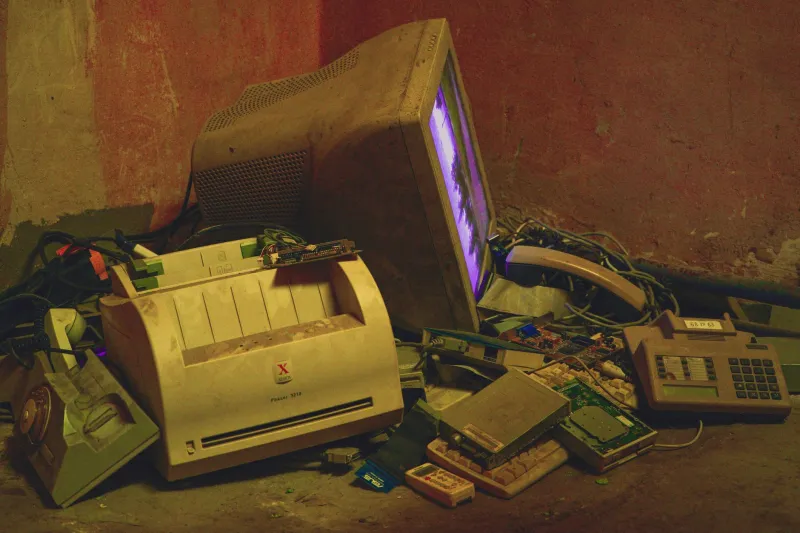
There's a forum out there — you probably haven't thought about it since the Bush administration — where a sixteen-year-old version of you argued passionately about whether Final Fantasy X or Final Fantasy VII was the superior game. The thread has 847 replies. The last one was posted in 2011. The site's layout still uses frames. And somebody read the whole thing last Tuesday.
That somebody wasn't you.
Welcome to the quietly weird world of forum archaeology — a subculture that doesn't have a clean name, doesn't have a subreddit (well, a few, but they're sleepy), and doesn't really want your attention. These are the people sifting through the skeletal remains of once-thriving message boards, reading decade-old conversations between strangers, and sometimes going out of their way to make sure those conversations don't disappear.
The Internet Has a Graveyard, and People Are Walking Through It
If you grew up online in the late nineties or early aughts, you probably remember the specific texture of forum culture. The avatars made in MS Paint. The signature blocks that were three times longer than anyone's actual post. The reputation systems that turned internet strangers into minor celebrities within their specific corner of fandom. Gaming forums especially had this quality — dense, hyper-specific communities organized around a single franchise, a single console, sometimes a single game.
Most of those communities are technically still online. That's the strange part. They didn't get deleted so much as they got abandoned. The servers kept running. The posts kept existing. The URLs still resolve. But the people left, migrated to Discord or Reddit or just stopped caring, and what remained was something that functions less like a website and more like a time capsule somebody forgot to bury.
People find these places through Google searches that go slightly sideways — hunting for a specific game mechanic, a piece of fan fiction, a cheat code explanation that modern wikis somehow haven't covered. The search result points to a thread from 2006. You click it. The page loads, barely. And suddenly you're reading an argument between "DarkPaladin88" and "xXSephirothFanXx" that has more emotional investment than most things you'll encounter this week.
Who Actually Goes Back
The people who deliberately seek these places out tend to fall into a few loose categories, though they overlap more than you'd expect.
There are the nostalgics — folks who remember being part of a specific community and return periodically like visiting an old neighborhood. They're not really looking for information. They're looking for a feeling. Reading a thread where their username appears, where their younger self had opinions they've since completely reversed, carries a specific emotional weight that's hard to get anywhere else online right now.
Then there are the researchers. Game historians, fan wiki contributors, journalists, and just deeply curious people who've realized that old forums contain enormous amounts of information that never made it to Wikipedia or the Wayback Machine's curated sections. Early speedrunning strategies. Detailed bug reports that explain why certain games behave the way they do. Developer interactions from before social media made that kind of engagement normal. This stuff is genuinely irreplaceable.
And then there's a third group that's harder to categorize — people who are drawn to these spaces not for nostalgia or information, but for something closer to intimacy. Reading strangers' old posts has a voyeuristic quality that's completely different from scrolling a modern social feed. These conversations weren't written to be consumed by an audience. They were written by people who thought they were talking to a small group of friends. There's a rawness to that. A specificity. "DarkPaladin88" wasn't performing. He was just annoyed about the ending of a game.
The People Who Keep the Lights On
Here's where it gets genuinely moving: some of these forums are still running because one person decided they should be.
Across the internet, there are individuals — usually the original admins or longtime moderators — who have been quietly paying server costs, updating software, fighting spam bots, and doing basically invisible maintenance work on communities that haven't had an active user in years. Not because anyone asked them to. Not because it's profitable. Because they feel, on some level, that these places matter.
Some of them are explicit about their reasoning. A guy maintaining a dormant Nintendo 64 fan forum once explained in a long post (addressed essentially to no one) that he'd been running the site for over two decades because he'd met his wife through it, and shutting it down felt like demolishing a building where something important happened. The building is empty. But the building was real.
This impulse has also spawned more organized preservation efforts. Projects like the Archive Team have made it their mission to scrape and save forums before they go dark, treating old message boards with the same urgency that archivists apply to deteriorating film reels. The Wayback Machine catches some of this, but not all of it — dynamic content, user profiles, and certain forum structures don't preserve cleanly, which means every site that goes offline takes something with it permanently.
What Gets Lost When the Forum Dies
The gaming world has particular reasons to care about this. A huge portion of early game culture — the theories, the discoveries, the modding communities, the fan fiction — lived on forums and nowhere else. The oral history of games like EverQuest, early Halo multiplayer culture, the original Dark Souls community figuring out the lore in real time — all of that happened on message boards, in threads that are now either gone or slowly degrading.
When a forum dies, it doesn't just take the posts. It takes the context. The inside jokes that evolved over years. The running arguments that shaped how a community understood a game. The moment when a moderator finally snapped and banned someone who'd been a thorn in everyone's side for three years. That stuff is the texture of online community, and it's almost entirely undocumented outside of the forums themselves.
The Frequency Nobody's Broadcasting On
There's something that fits weirdly well here, with what Nirgilis is about. These dead forums are broadcasting on a frequency nobody's tuned to — strange signals from a version of the internet that operated on completely different logic. Slower. More anonymous. More willing to sit with a topic for years instead of days.
The people reading your 2004 posts aren't doing it to embarrass you. Most of them are doing it because something about that older internet — that specific texture of people talking seriously about things that didn't matter to anyone outside their community — feels genuinely rare now. Maybe even valuable.
Your argument about Final Fantasy is still out there. Someone found it. They read the whole thing. And honestly? They probably agreed with you.