Nothing to Hide, Everything to Protect: The People Encrypting Their Whole Lives Just to Make a Point
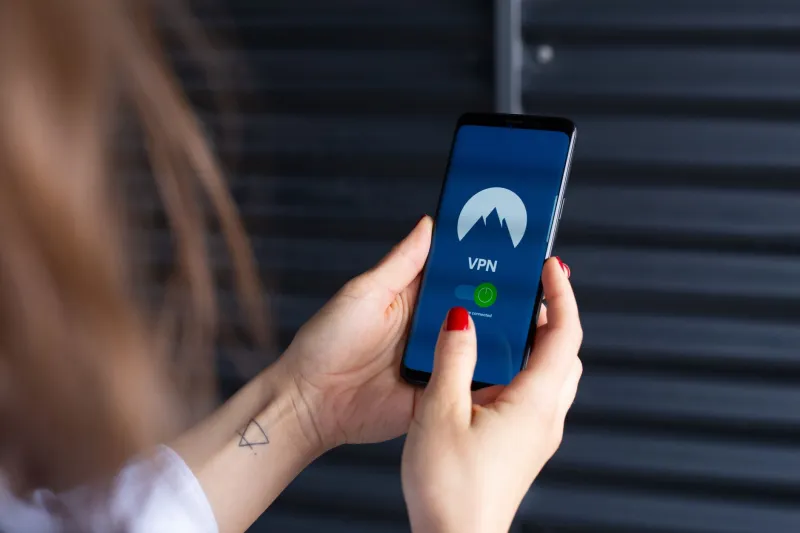
Dave Kowalski buys his coffee with cash. He uses a prepaid phone for anything he considers "sensitive," which, by his own definition, includes ordering pizza. His main phone runs GrapheneOS. His laptop boots from an encrypted drive. He uses Signal for everything, including, he admits with a slight grin, coordinating Thanksgiving dinner with his sister in Akron.
Dave is a 44-year-old high school history teacher in Columbus, Ohio. He has no criminal record, no controversial political affiliations, no secrets worth protecting in any conventional sense. He is not a journalist, a whistleblower, or a dissident. He is, by most measures, a completely ordinary American man who has decided to treat his personal data like a civil liberty.
"I get the 'nothing to hide' argument," he says. "I just think it fundamentally misunderstands what privacy is for."
The Philosophy Before the Product
The privacy-as-principle crowd — call them the philosophical encryptions, the principled paranoids, whatever label fits — are a genuinely strange cultural artifact of the current moment. They are not unified by party, age, or profession. What unites them is a specific intellectual conviction: that surveillance capitalism isn't just annoying, it's structurally corrosive, and that opting out of it, even partially, even symbolically, is a meaningful act.
The argument goes something like this. When people know they're being observed, they self-censor. They smooth out the weird edges. They perform rather than live. The person who assumes their search history is being catalogued and sold searches differently than someone who believes their curiosity is private. Multiply that effect across 300 million people and you get a society that has slowly trained itself out of genuine private thought.
It's a position that draws from everyone from Michel Foucault to Shoshana Zuboff, though most of the people living it couldn't tell you either name. They just feel, viscerally, that something is wrong with the current arrangement.
The Daily Architecture of Opting Out
The actual mechanics of this lifestyle are more mundane than the ideology suggests. Most people in these communities aren't running server farms in their basements. The stack, as they call it, typically looks something like this: Signal for messaging, ProtonMail for email, a VPN running constantly, a privacy-focused browser like Brave or Firefox with a specific set of extensions, and cash for anything they'd rather not attach to a financial profile.
Some go further. Faraday bags for phones when they don't want location data logged. Tape over laptop cameras — not because they think they're being watched right now, but as a habit of mind. Analog notebooks for things they'd previously have typed. The notebook thing comes up constantly in these communities, almost like a talisman: the physical record that can't be subpoenaed from a server because it doesn't live on one.
"There's something clarifying about writing things down in a way that only you can access," says Renata Osei, a freelance graphic designer in Atlanta who started down this path after reading about the Cambridge Analytica scandal. "I think more carefully about what I actually think."
The Communities That Form Around Quiet Resistance
Online spaces for this crowd are predictably scattered and deliberately low-profile. There are subreddits, Signal group chats (obviously), and a constellation of forums that prize the kind of long-form, link-heavy discussion that algorithm-driven platforms systematically discourage. The vibe is less paranoid bunker, more reading group that got really into one specific subject.
What's notable is the range of people in these spaces. Former libertarians sit alongside progressive academics. Cybersecurity professionals share threads with retired schoolteachers. The ideological throughline isn't left or right — it's a shared distrust of centralized data collection that cuts across conventional political categories in ways that feel increasingly rare.
"It's one of the few places I've found where someone can say 'I don't trust Google' and get a thoughtful response instead of being called a conspiracy theorist," says Dave.
Prescient or Paranoid? (Or Both?)
The honest answer is that the line between those two things keeps moving. Five years ago, the idea that your phone's location data might be sold to political campaigns or law enforcement without a warrant sounded like tinfoil-hat territory. Now it's documented, reported, and largely shrugged at.
What these people are doing — the cash purchases, the encrypted drives, the analog backups — is, at minimum, a coherent response to a real set of documented practices. Whether it constitutes resistance in any meaningful political sense is a different question. You can encrypt your life and still live inside the same economic system that made surveillance capitalism possible. Signal doesn't opt you out of anything except the specific data collection that happens on Signal.
But maybe that's not the point. Dave the history teacher has a way of putting it that sticks with you.
"History teachers think a lot about what gets recorded and what doesn't," he says. "The record shapes the story. I just want some part of my life to be off the record. Not because it's interesting. Because it's mine."
He pays for the coffee. He walks out. His phone, in his jacket pocket, is technically off.