Turn the Dial: The Micro-Radio Rebels Who Are Reclaiming Music Discovery from the Algorithm
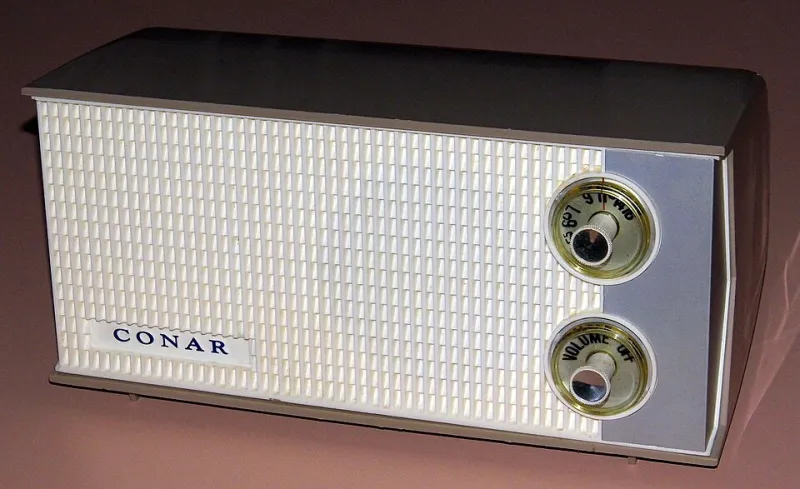
Photo: Joe Haupt from USA, CC BY-SA 2.0, via Wikimedia Commons
Somewhere in a strip mall in Albuquerque, a 34-year-old named Marcus is two hours into a Thursday night radio show that exactly forty-three people are listening to. He knows this because his streaming dashboard tells him. He doesn't care. He just queued up a 1973 Fela Kuti record followed by a local punk band that released a cassette last month, and he's talking over the transition in a way that no recommendation algorithm has ever figured out how to replicate.
This is micro-radio. And it's having a moment.
The Algorithm Problem Nobody Talks About Honestly
Spotify's Discover Weekly is, by most technical measures, impressive. It learns your preferences, cross-references them against millions of other listeners, and surfaces music you probably didn't know you wanted to hear. It works. And yet a growing number of people — disproportionately Millennials who remember what music discovery felt like before playlists took over — describe using it as vaguely exhausting.
The issue isn't that algorithmic curation is bad at its job. The issue is what the job actually is. Streaming platforms optimize for engagement, which in practice means recommending music that's similar enough to what you already like to keep you on the platform without making you skip. That's a retention problem being solved, not a discovery problem. The result is a kind of comfortable narrowing — you get more of what you already are, forever.
Community radio, at its best, does the opposite. A good radio host plays things you'd never search for, connects them in ways that feel personal rather than statistical, and occasionally plays something you actively hate — which is itself a form of information about the world.
Low-Power FM and the Legal Path
The FCC's Low Power FM (LPFM) program, which expanded significantly after regulatory changes in 2013, created a legitimate pathway for community organizations to operate small broadcast stations — typically covering a radius of a few miles — without the licensing costs and complexity of full-power commercial radio. There are now over 2,000 licensed LPFM stations operating across the US, and the number has been climbing steadily.
Many of these are operated by nonprofits, churches, and community organizations. But a notable slice of the new wave is being run by people who fit a pretty specific profile: Millennials with strong opinions about music, a nostalgia for pre-streaming music culture, and enough technical curiosity to figure out how a transmitter works. The barrier to entry is real — licensing takes time, equipment costs money, and you need a physical location with line-of-sight for your antenna — but it's not prohibitive for a motivated group.
Stations like WXOX in Louisville, Kentucky, and Double Double Whammy Radio out of New York have built genuine communities around their broadcasts, attracting listeners who tune in specifically because they don't know what's coming next.
Pirate Radio Is Still Out Here
Not everyone is taking the FCC paperwork route. Pirate radio — unlicensed FM broadcasting — never really went away in the US, and it's seeing a quiet resurgence in urban markets where the FM dial is crowded with corporate-owned stations playing the same forty songs on rotation.
In Miami, New York, and parts of Los Angeles, you can still find unlicensed stations broadcasting Caribbean music, Haitian Creole programming, and hyper-local hip-hop that the licensed dial has no room for. The FCC does enforce against these operations, and the fines can be significant — but the cultural need they're serving is real enough that people keep doing it anyway.
The newer wave of micro-radio rebels tends to be more cautious, preferring internet streaming to avoid legal exposure while preserving the ethos of unlicensed broadcasting: no format requirements, no advertisers, no algorithm. Platforms like Mixcloud, Radio.co, and the wonderfully chaotic Radio Garden have made it possible to run something that functions exactly like a radio station — scheduled programming, live DJ sets, call-in segments — without touching the FM spectrum at all.
What You Actually Get from Human Curation
Ask someone who's gotten deep into community radio what keeps them coming back, and they'll usually say some version of the same thing: I trust the person behind it.
That's not a small thing. Algorithmic recommendation is built on revealed preference — it watches what you do and extrapolates. Human curation is built on something more like taste, which includes the ability to recommend things that don't fit your current preferences because the curator believes they should. A radio host can play a song they love even if the audience data suggests it'll cause drop-offs. An algorithm can't make that call.
There's also the communal dimension. Listening to a radio station — even a tiny internet one with forty-three listeners — means you're sharing an experience with other people in real time. You're not constructing a personalized bubble. You're tuning into a frequency that other people are also tuned into, which creates a different kind of connection to the music.
This is the part of radio that streaming genuinely hasn't figured out how to replicate. Spotify's Group Session feature and Apple Music's SharePlay are technically interesting, but they're fundamentally different from the shared experience of a broadcast. Radio is public by design. Streaming is private by design. Those aren't equivalent.
The Nostalgia Trap (And Why This Isn't That)
It would be easy to frame the micro-radio revival as pure nostalgia — Millennials recreating the college radio experience of their youth because they're uncomfortable with how much the internet has changed. That reading is too simple.
The people building these stations aren't trying to go back to 1998. They're using modern streaming infrastructure, social media to build audiences, and digital audio workstations to produce their shows. What they're rejecting isn't technology — it's a specific model of technology that treats listeners as data points to be optimized rather than people to be surprised.
The frequency Marcus is broadcasting on from that Albuquerque strip mall isn't a nostalgia trip. It's a genuinely different proposition about what music discovery can feel like when a human being is making the decisions. Forty-three people are listening on a Thursday night, and none of them know what's coming next.
That uncertainty, it turns out, is the whole point.