Chasing Static: The Collectors Who Can't Stop Listening to Radio Signals Nobody Sent Them
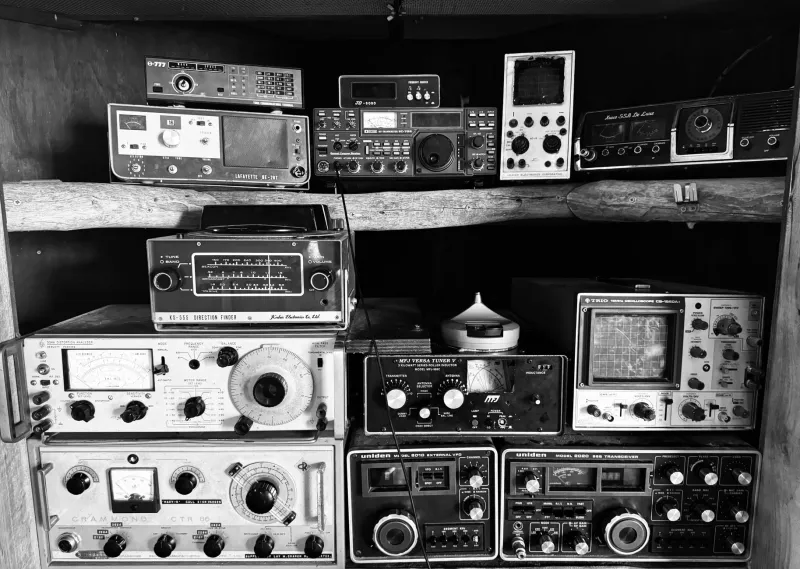
There's a guy in rural Ohio who hasn't slept past 4 a.m. on a Saturday in eleven years. Not because of insomnia, not because of a job — because that's when a particular shortwave frequency out of somewhere in Eastern Europe does something interesting. He's logged it 340 times. He's never told anyone why he started.
This is what shortwave radio collecting looks like from the inside. It's not glamorous. It's not always explainable. But the community that's built up around it is one of the more quietly remarkable subcultures operating in plain sight right now — or, more accurately, in plain earshot.
What Even Is Shortwave Anymore?
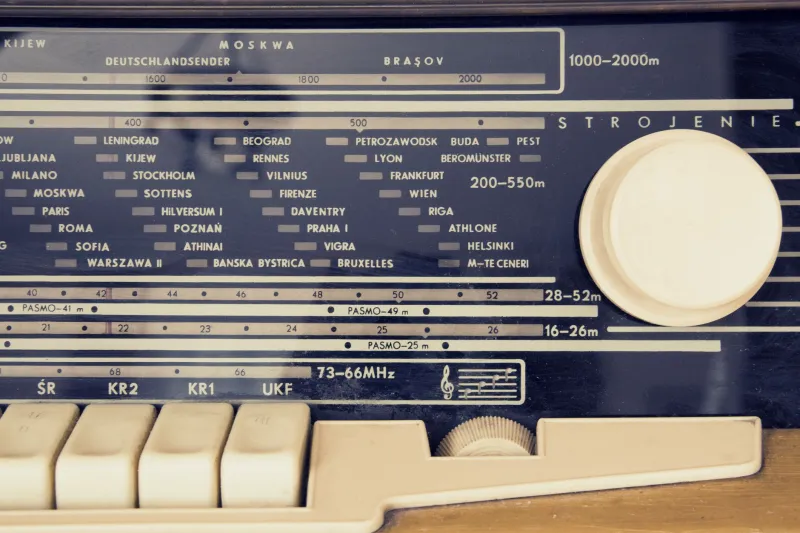
For most Americans under 40, shortwave radio is something their grandparents mentioned once in the context of the Cold War. And yeah, that's not wrong — shortwave was the backbone of international broadcasting for decades, the way governments and clandestine operators pushed signals across oceans before the internet made that trivially easy.
But here's the thing: shortwave didn't die. It just got weird.
The frequencies are still alive with traffic — weather fax transmissions, military time signals, aeronautical communication, religious broadcasters, pirate stations running out of converted garages in New Jersey, and the ones that really get people: numbers stations. Those are the broadcasts that sound like a robot reading strings of digits into a void. Nobody officially claims them. Intelligence agencies have never confirmed what they're for. The popular theory is that they're one-way communication to field agents, and that theory has never really been disproven.
For a certain kind of person, all of this is irresistible.
The Documentation Problem (Which They've Basically Solved Themselves)
Here's where shortwave collecting gets genuinely impressive. The hobbyist community — loosely organized through forums, Discord servers, and a handful of legacy websites that look like they were designed in 2003 and have been lovingly maintained ever since — has built documentation infrastructure that rivals what you'd expect from an institution.
Frequency databases updated in real time. Timestamped logs cross-referenced across listeners in different time zones. Audio archives going back decades, with metadata more detailed than most libraries bother with. Some collectors have developed their own signal fingerprinting techniques, ways of identifying a transmitter by the subtle quirks in its waveform rather than its content.
None of this was coordinated by any organization. Nobody got a grant. It happened because the people doing it couldn't stop themselves.
"There's a completionist instinct in this community that I think comes from the same place as record collecting or game archiving," says one longtime contributor to a major shortwave logging database who asked to be identified only by his callsign. "You hear something once and you need to hear it again. You need to know if it repeats. You need to know if anyone else heard it. And then suddenly you've got a spreadsheet and a schedule and a very understanding spouse."
The Analog Pull in a Streaming World
It's worth asking why, in 2024, anyone would choose to spend hours with a radio receiver and a notebook when they could be consuming literally anything else on demand. The shortwave community has thought about this more than you'd expect.
Part of it is the unpredictability. Streaming is frictionless by design — the algorithm anticipates what you want before you want it, and that's genuinely convenient, but it removes something in the process. Shortwave is the opposite. The ionosphere bounces signals differently depending on solar activity, time of day, season. A frequency you've been monitoring for months might suddenly carry something completely unexpected. Or it might carry nothing but static for six hours. You don't control it. The experience controls you.
There's also the question of what's actually on these frequencies. A lot of shortwave content is mundane — weather data, time codes, aviation chatter. But the mundane, when it's sufficiently alien, starts to feel significant. Listeners describe a particular quality of attention that shortwave demands, a kind of focused patience that feels different from any other media consumption. One collector in the Pacific Northwest describes it as "the opposite of doom-scrolling. You're waiting for something real to happen instead of refreshing until something fake does."
Numbers Stations and the Mythology Problem
No conversation about shortwave collecting stays away from numbers stations for long. They're the community's white whale and its most reliable recruiting tool — the thing that pulls curious newcomers in and rarely lets them go.
The Conet Project, a four-disc compilation of numbers station recordings released in 1997, introduced a lot of people to the concept. Wilco sampled it on Yankee Hotel Foxtrot. Boards of Canada made an aesthetic out of similar textures. The cultural footprint of numbers stations is weirdly large for something that technically doesn't exist according to any government.
But the mythology around them can be a double-edged thing for serious collectors. The community has a complicated relationship with the more conspiratorial corners of the internet that have latched onto shortwave as evidence of various shadow operations. The serious documentarians tend to be pretty rigorous — they want timestamps, corroboration, technical explanation where it's available. The vibe is less "the truth is out there" and more "the data is out there, let's log it properly."
"We're not trying to decode anything," says a collector who runs one of the more active shortwave subreddits. "Most of us have made peace with the fact that we're never going to know what half of this stuff means. The point is the listening. The point is the record."
What They Think They're Preserving
Ask a shortwave collector what they're actually doing and you'll get different answers depending on who you ask. Some frame it as technical hobby, full stop. Others talk about it in terms of media archaeology — the idea that these frequencies carry a kind of communication history that isn't being preserved anywhere else.
Some of the stations being logged right now are broadcasting on equipment that won't be replaced when it breaks. Entire transmission infrastructures are winding down as the use cases for shortwave narrow. The collectors are aware that they're watching something fade, and the logging has taken on a certain urgency because of it.
There's something in that impulse that feels familiar if you've been paying attention to how niche communities handle the threat of disappearance. The game archivists, the tape preservationists, the zine librarians — they all share this instinct that if nobody else is going to document it, you might as well be the one who does.
Shortwave collectors are doing that with the electromagnetic spectrum itself. With the parts of it that still crackle and hum and occasionally read numbers into the dark for reasons nobody will officially confirm.
The guy in Ohio is still up at 4 a.m. The frequency is doing something interesting again. He's writing it down.