Ghost Signals: The Obsessives Tuning Into Encrypted Broadcasts Nobody Was Meant to Hear
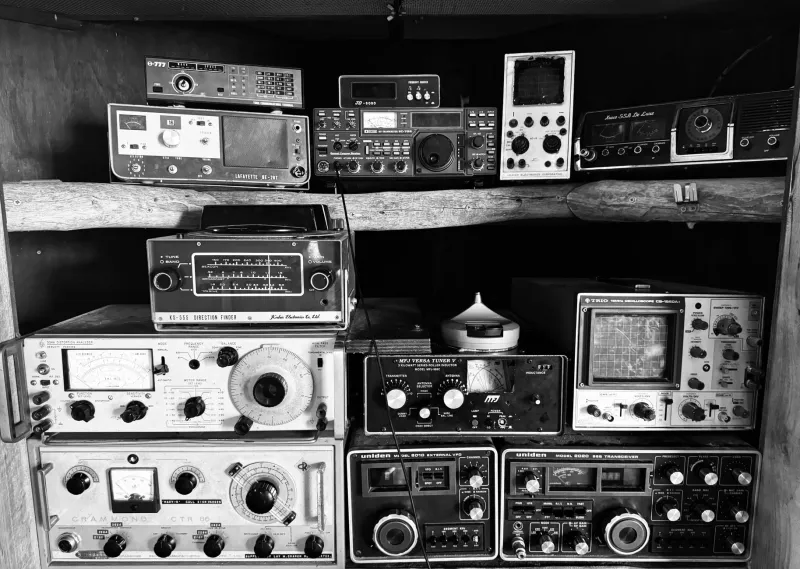
There's a frequency out there — maybe several — where a woman's voice, calm and mechanical, reads five-digit number groups into the shortwave ether. No introduction. No sign-off. Just numbers, then silence, then static. It happens at the same time each week. It has for decades. No government on Earth will officially confirm it exists.
And somewhere in a basement in suburban Ohio, a guy named Dale has 47 years of recordings.
This is the world of numbers stations — one of the strangest, most stubbornly analog subcultures still operating in an era when most mysteries get googled into oblivion within minutes. The people who chase these signals aren't fringe conspiracy theorists (well, not entirely). They're archivists, amateur cryptographers, retired engineers, and deeply curious weirdos who find something genuinely thrilling about a secret that refuses to be cracked open.
What Even Is a Numbers Station
The short version: shortwave radio stations, almost certainly operated by intelligence agencies, that broadcast encrypted messages to field operatives. The spy receives a one-time pad — a codebook used once and destroyed — and uses it to decode whatever string of numbers just came through their cheap transistor radio in some foreign capital. No internet required. No traceable communication. Just radio waves bouncing off the ionosphere and a spy writing in a notebook.
They've been documented since at least World War I. The Cold War turned them into a cottage industry of paranoia. And here's the kicker: they're still broadcasting. Right now. Tonight. You can tune in.
The Conet Project, a four-disc compilation released in 1997 by the UK label Irdial-Discs, brought numbers stations to a wider audience — sampling them into ambient and experimental music, giving them a cultural footprint that outlasted any individual recording. Wilco famously sampled it on Yankee Hotel Foxtrot. But for the community that actually monitors these frequencies, the Conet Project was less a discovery and more a validation. Someone else finally heard what they'd been hearing for years.
The Listening Community
Online forums like the Utility DXers Forum and various shortwave-focused subreddits serve as the nervous system of this hobby. People post logs — date, time, frequency, what they heard — with the meticulous energy of birders cataloguing a rare warbler. New signals get cross-referenced against known station profiles. Anomalies spark long threads.
"There's a station we call E10," explains one forum regular who goes by the handle Prism_Ear. "It's been running since at least the '70s. Female voice, Spanish, five-figure groups. You can set your watch to it. And nobody — nobody official — will say a word about it."
That official silence is a huge part of the appeal. Unlike most modern mysteries, which collapse under the weight of crowdsourced investigation, numbers stations exist in a space where governments have every incentive to stay quiet. Acknowledging them would mean acknowledging espionage operations. So the silence becomes its own kind of confirmation.
The Archive Problem
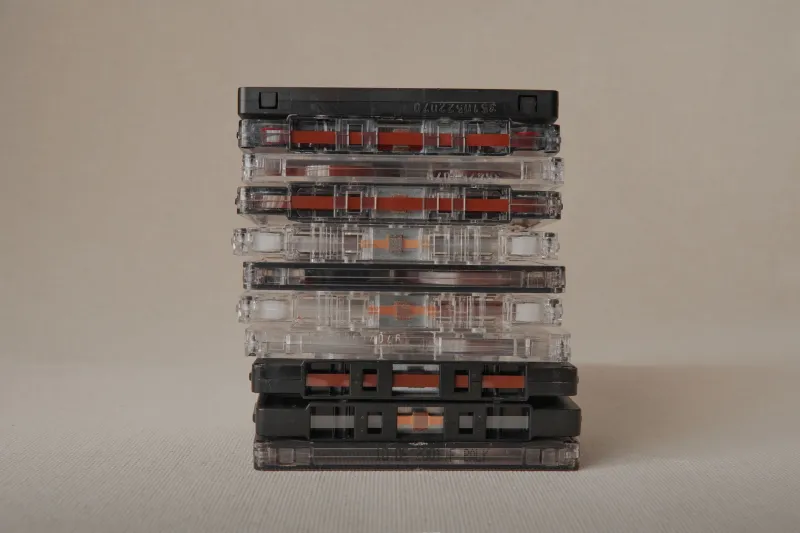
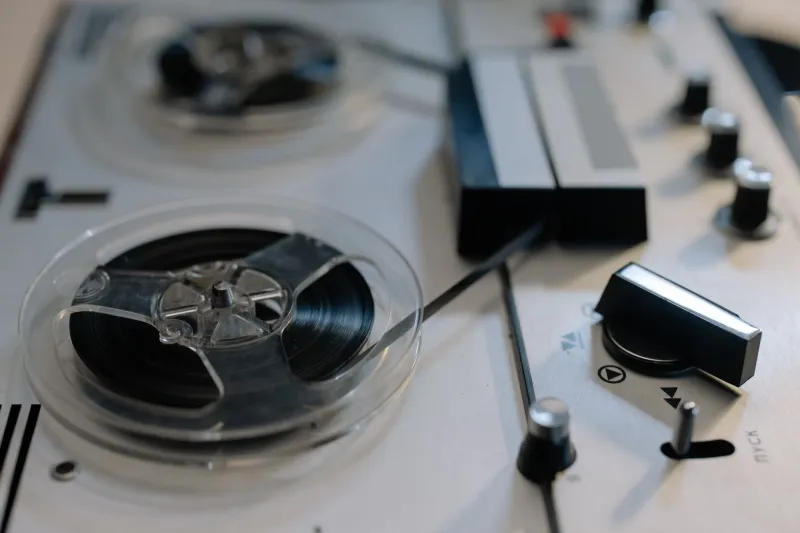
Here's where it gets genuinely interesting from a preservation standpoint. These broadcasts exist in real time, on analog frequencies, often with no digital trace unless someone physically recorded them. Which means the archive is entirely community-built — cassette tapes from the '70s, reel-to-reel recordings from Cold War-era hobbyists, DAT transfers from the '90s, and now increasingly clean digital captures from software-defined radio setups.
Some collectors have amassed libraries that intelligence historians would probably trade significant resources to access. Recordings of stations that no longer broadcast. Frequencies that went dark when the Soviet Union collapsed. Voices that nobody's heard in thirty years.
"I have a recording from 1983 of what we believe was an East German station," says one collector who asked to remain anonymous. "The voice pattern, the scheduling, the frequency — it matches documented GDR intelligence protocols. That recording doesn't exist anywhere official. It exists because my uncle pointed an antenna at the sky and hit record."
That's the thing about analog mysteries: they require analog preservation. And the community doing that work is aging.
Why This Feels Different From Other Rabbit Holes
In an era drowning in manufactured mystery — ARGs, creepypasta, escape rooms, viral puzzles engineered for engagement — numbers stations represent something genuinely unresolved. Nobody's selling merch. There's no Season 2. The signal doesn't care if you're listening.
That distinction matters to the people who monitor them. "Every other 'mystery' online has a creator somewhere," Prism_Ear says. "Numbers stations have a creator too — it's probably the NSA, or GCHQ, or the SVR. But they're not trying to entertain you. They're not even trying to be found. That's a completely different energy."
There's also something almost meditative about the listening itself. Shortwave radio reception is variable, atmospheric, alive. You're not streaming a file. You're catching something from the air — a signal that's traveled thousands of miles, bounced off the ionosphere, degraded and distorted and still somehow coherent enough to carry meaning to whoever it was meant for. You're intercepting something. That's a tactile thrill no algorithm delivers.
The Music Connection
It would be wrong to write about numbers stations without acknowledging how thoroughly they've infiltrated experimental and ambient music. Beyond the Conet Project, artists from Boards of Canada to The Caretaker have drawn on the aesthetic of shortwave static and mechanical voices. There's something about the combination — inhuman delivery, encrypted content, vast distance — that maps perfectly onto the emotional texture of certain electronic music.
Some composers in the community have started treating their own recordings as raw material. Field recordings of intercepted signals, processed and layered, turned into something between documentary and composition. It's a genuinely strange corner of experimental music that doesn't have a proper genre name yet.
Tune In, If You Can
Getting started is cheaper than you'd think. A basic software-defined radio dongle — the kind you plug into a USB port — runs about $25 and, paired with free software like SDR#, opens up the entire shortwave spectrum. Websites like priyom.org maintain active schedules of known numbers station broadcasts, updated by the community in real time.
You won't decode anything. Nobody outside of whoever's meant to receive these messages ever has, not with any verified certainty. But you'll hear something — a voice reading numbers into a frequency that officially doesn't exist, for a purpose nobody will confirm, in a tradition that's outlasted every technology that was supposed to make it obsolete.
That's the frequency Nirgilis lives on, in a way. Strange signals for people who can't help but listen. The numbers stations just got there first.