Static Preservationists: The Obsessives Rescuing Pirate Radio Before the Tape Dissolves
There's a particular kind of audio that doesn't exist on any streaming platform, can't be licensed, and was never supposed to last. It came through a car radio at two in the morning, or crackled out of a kitchen speaker while someone's parents slept down the hall. It was pirate radio — unlicensed, often illegal, almost always passionate — and for decades it was the only place certain music actually lived.
Now a loose network of archivists, hobbyists, and audio historians is trying to make sure it doesn't vanish entirely. They're working with degrading tapes, corrupted reel-to-reel recordings, and cassettes that are one playback away from shedding their oxide coating forever. And they're doing it mostly without institutional support, legal cover, or much acknowledgment from the music world they're quietly serving.
What Pirate Radio Actually Was
The term gets used loosely, but in the US context it mostly refers to unlicensed FM and AM broadcasts that operated outside FCC licensing — sometimes for political reasons, sometimes because the licensing process was prohibitively expensive, and often just because someone had a transmitter and something to say. Stations like KPFZ before it got licensed, the various Free Radio Berkeley operations, New York's micro-FM scene in the nineties, and the offshore-inspired shortwave experiments of the eighties all fall somewhere under this umbrella.
What made them culturally significant wasn't just the illegality. It was the programming. Without advertiser pressure or format consultants, pirate stations played things commercial radio wouldn't touch — experimental electronic music, deep reggae, early hip-hop in markets that had no hip-hop stations, avant-garde noise, and community content in languages that mainstream broadcasters ignored. Some of the most influential DJs in American music history cut their teeth on rogue transmitters.
Almost none of it was recorded in any systematic way.
The Tape Problem
Most pirate stations operated on thin margins and thinner storage budgets. If a broadcast was captured at all, it was usually by a listener hitting record on a cheap cassette deck. Those tapes then spent the next thirty years in attics, storage units, and moving boxes — surviving floods, mold, and the general indifference of people who didn't realize what they had.
The archivists hunting these recordings describe the discovery process as something between archaeology and yard sale treasure hunting. Online forums, estate sales, Facebook groups for vintage electronics collectors, and word-of-mouth through old community radio networks are the primary pipelines. Occasionally a former DJ surfaces and hands over a box of airchecks. More often, someone's adult child is cleaning out a house and stumbles on a collection they can't identify.
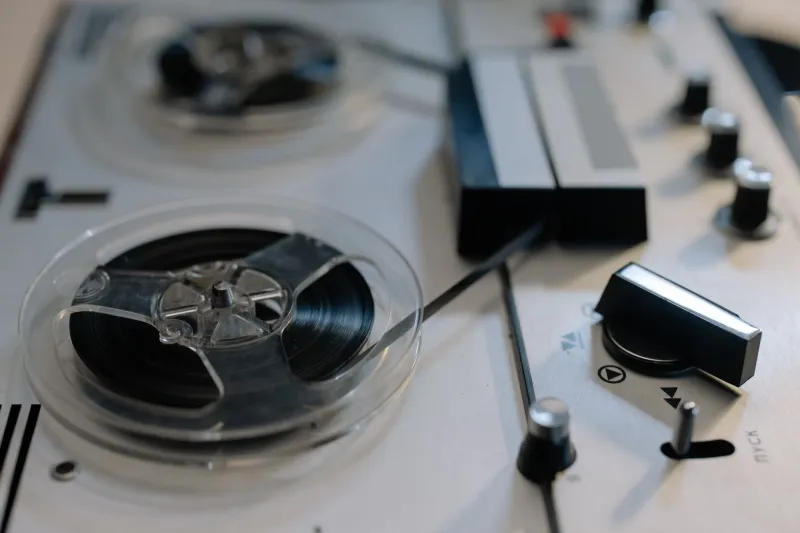
Once a tape is found, the technical work is painstaking. Baking magnetic tape to temporarily restabilize the oxide layer — a process called "baking" that sounds more dramatic than it is — is sometimes necessary before a recording can even be played. Azimuth alignment on playback decks has to be calibrated to match whatever machine made the original recording. Noise reduction has to be applied carefully enough to clean up hiss without erasing the ambient texture that makes these recordings feel real.
That texture matters to the people doing this work. A lot of them are emphatic about it.
Why Authenticity Has a Frequency
Ask any of these archivists why they're doing this and you'll get variations on the same answer: the music sounds different when it came from somewhere real. Not better produced — often the opposite. But the compression artifacts, the DJ crosstalk, the transmitter drift that makes a signal waver slightly, the station IDs that were themselves improvised — all of it encodes context that a clean studio file doesn't carry.
For contemporary producers and musicians who are increasingly skeptical of algorithmic-optimized audio, that context is the whole point. There's a growing interest in what some people are calling "situated sound" — recordings that carry evidence of where and how they were made, as opposed to the placeless perfection of modern production. Pirate radio archives are, in this framing, primary sources for a kind of music-making that understood its own marginality and leaned into it.
Several independent producers have quietly cited pirate radio recordings as reference material — not for sampling (that's its own legal minefield) but for understanding how certain sounds were constructed and transmitted under constraint. The limitation was the aesthetic.
The Legal Gray Zone
None of this is legally simple. Pirate broadcasts were unlicensed, but the music played on them was still subject to copyright. An archivist preserving a 1993 recording of a pirate station playing unlicensed tracks is, technically, preserving a copyright violation. Sharing that recording publicly compounds the issue.
Most of the active archivists are careful here. The recordings that get posted publicly tend to be ones where the musical content is either in the public domain, obscure enough that rights holders are effectively nonexistent, or covered by the kind of informal tolerance that copyright holders sometimes extend to non-commercial preservation efforts. The more sensitive material stays in private collections, accessible to researchers on request.
The FCC's jurisdiction over the original broadcasts has long since lapsed in any practical sense — you can't retroactively prosecute a 1988 transmission — but the music rights question doesn't expire the same way. It's an awkward situation that nobody has fully resolved, and most archivists have simply decided to operate carefully rather than wait for clarity that may never come.
Who's Actually Doing This
The community is smaller than you'd expect and more connected than it looks from the outside. There are dedicated forums where archivists share digitization techniques and swap leads on tape collections. The Internet Archive hosts a significant amount of this material under its audio collections, often uploaded by individuals who've spent months processing a single box of tapes. Organizations like the Museum of Broadcasting Communications and various university radio archives occasionally receive donations, though institutional interest in pirate material specifically is limited.
The people doing the work are a mix: retired engineers who worked in broadcasting and feel a professional obligation to the medium, music historians with specific regional interests, collectors who started with vinyl and followed the rabbit hole backward into broadcast, and younger researchers who found these recordings through sample culture and got hooked on the broader story.
What they share is a tolerance for slow, unglamorous work with uncertain outcomes. A lot of tapes turn out to be damaged beyond recovery. A lot of recordings, once digitized, turn out to be less historically significant than hoped. The ratio of effort to discovery is brutal. They do it anyway.
Why It Matters Now
There's something fitting about pirate radio finding its way to platforms like the Internet Archive in the streaming era. The original broadcasts existed outside the commercial infrastructure of their time. The archives are being built outside the commercial infrastructure of ours — no algorithm is surfacing these recordings, no playlist is contextualizing them, no label is monetizing them.
For anyone paying attention to where music culture is straining against its current constraints, that parallel is worth sitting with. The people who ran pirate stations weren't just breaking the law. They were arguing, with transmitters and turntables, that the official channels weren't serving everyone who needed to be served.
The archivists preserving their work are making a quieter version of the same argument. Some frequencies deserve to survive even when nobody's profiting from keeping them alive.