No Upload Required: The Darkroom Collectives Keeping Film Permanently Offline
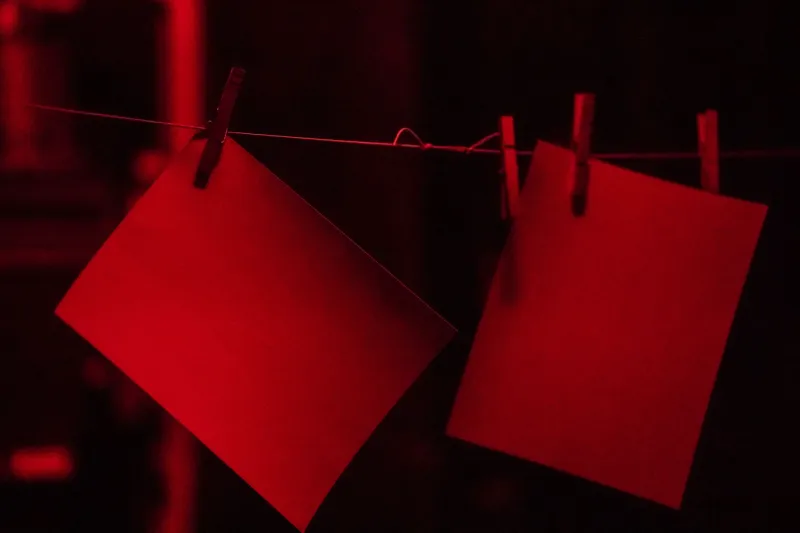
There's a darkroom in a converted garage somewhere in East Nashville that you probably can't get into. Not because the people inside are unfriendly — by all accounts they're generous with their chemistry and their time — but because membership isn't posted anywhere, the waiting list travels by word of mouth, and the only portfolio review that matters happens in person, under a safelight, looking at actual prints. No Instagram. No website. Definitely no digital scans.
This is the part that surprises people who stumble onto the scene from the outside. The film photography revival has been documented to death — the Kodak Portra resurgence, the disposable camera aesthetic bleeding into fashion campaigns, the endless YouTube tutorials on developing your first roll of black-and-white. What's less visible, almost by design, is the faction that looked at that revival and decided the whole thing was already being swallowed by the same machine everyone was supposedly escaping.
These are the analog purists who aren't just shooting on film. They're refusing to digitize it at all.
The Scan Is the Compromise
If you've spent any time in film photography spaces online, you know the standard pipeline: shoot on film, develop in a lab or at home, scan the negatives, upload to a feed. The resulting aesthetic — grain, color shifts, light leaks — becomes the point, the thing that makes the image feel different from a phone photo. But the image itself still lives on a server somewhere. It still gets compressed, algorithmically sorted, and served alongside ads for camera gear.
For a growing number of photographers, that's where the whole project falls apart.
"Scanning is just digitizing the vibe," says one photographer who runs a collective out of a shared studio space in Philadelphia's Kensington neighborhood. She asked not to be named because, as she put it, "the whole point is that we're not trying to be found." "You shoot on film because you want a different relationship with the image. Then you scan it and post it and you're right back in the same attention economy you left. What was the point?"
The alternative these collectives have built is slower, more physical, and deliberately harder to scale. Prints get made in the darkroom — wet prints, on fiber-based paper, the kind that takes hours to properly wash and dry. Those prints either stay with the photographer, get traded within the collective, or end up in hand-assembled zines that are sold or given away at in-person events. The negative never touches a flatbed scanner. The image never becomes a file.
Scarcity as Philosophy
This isn't just aesthetic stubbornness, though there's plenty of that too. There's a genuine philosophy underneath it about what scarcity does to the experience of an image.
When something can be infinitely reproduced and instantly distributed, the argument goes, the act of looking at it changes. You're not really looking — you're scrolling past. The image becomes content. But a print that exists in maybe twenty copies, that you had to show up somewhere to see, that you can hold in your hands and feel the paper texture of — that image demands a different kind of attention.
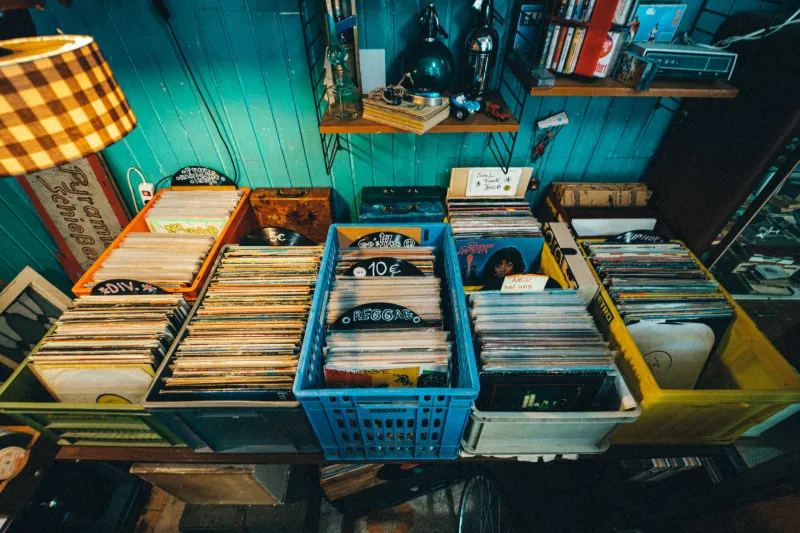
Some collectives have taken this further by building what amounts to a parallel exhibition circuit. Small shows in unusual spaces: the back room of a record shop in Portland, a borrowed warehouse in Detroit, a coffee shop in Austin that closes early on Thursdays so the walls can be taken over for a few hours. No press releases. Announcements go out through personal networks, sometimes literally by flyer. Attendance is capped not by fire code but by intentional choice.
The effect, reported by people who've managed to get into these spaces, is genuinely disorienting in a good way. You're looking at photographs that you cannot look up later. There's no way to revisit them at 2am on your phone. You either pay attention now or you don't see them at all.
The Zine as Distribution Channel
The hand-printed zine has become the primary publishing format for this scene, which connects it to a longer lineage of underground media that Nirgilis readers probably recognize from the music world. The logistics are remarkably similar to what tape traders and record collectors have been doing for decades: small print runs, direct exchange, a secondary market that operates entirely on trust and reputation.
Some of these zines are technically sophisticated — letterpress covers, multiple paper stocks, careful sequencing that treats the physical object as part of the work. Others are deliberately rough, photocopied and stapled in editions of thirty or forty, distributed at shows and mailed to people in the network. What they share is the absence of a digital version. You can't download a PDF. You can't find scans on a subreddit. If you want to read it, you have to get your hands on one.
This has created its own economy, predictably. Zines from certain photographers or collectives have become legitimately sought-after objects, trading at multiples of their original prices among people who know the scene. The photographers who made them often have complicated feelings about this. The scarcity was supposed to mean something, and it still does — but there's something uncomfortable about your refusal to engage with markets becoming its own kind of market.
Who Gets Left Out
It's worth sitting with the obvious tension here. A movement built around limiting access is, by definition, going to exclude people. The question of who gets excluded — and who already had access to the networks that make inclusion possible — isn't one these collectives have fully resolved.
Darkroom chemistry costs money. Having a garage to convert costs money. The time required to make wet prints and hand-assemble zines is time that not everyone has. The word-of-mouth networks that connect these collectives tend to run through art schools and established creative communities in cities where the cost of living has already pushed out a lot of people.
Some photographers in the scene are aware of this and actively working on it — running free darkroom workshops, donating chemistry to community programs, making deliberate efforts to extend the networks into communities that don't usually get invited. Others are less reflective about it. The romance of the exclusive, underground space can paper over a lot of structural inequality if you let it.
The Frequency You Can't Stream
What's interesting about this movement, from a certain angle, is how much it resembles other underground scenes that have used technological limitation as a creative and community-building tool. The cassette tape people. The shortwave radio obsessives. The VHS archivists. There's a recurring impulse, in a culture that keeps promising infinite access to everything, to choose scarcity — to say that some things should be harder to get to, that the friction is part of the value.
Film photography's offline underground is just the latest version of that impulse, applied to images. The darkroom as a space that exists outside the feed. The print as an object that can't be screenshot and reposted. The collective as a community that you have to physically show up to join.
You might not be able to find them. But they're out there, in converted garages and borrowed back rooms, developing film in the dark and making things that will never be uploaded anywhere. Whether that's a radical act or a luxury depends on who you ask. Either way, it's a frequency worth knowing about — even if you can't tune in from your couch.