Voices From Nowhere: The Amateur Sleuths Decoding Shortwave's Most Stubborn Secrets
Voices From Nowhere: The Amateur Sleuths Decoding Shortwave's Most Strangest Secrets
There's a frequency — let's not name it, because the people who care about these things prefer you find it yourself — where, on certain days at certain times, a synthetic or human voice begins reciting numbers. Groups of five digits, read with mechanical calm, repeated twice, then gone. No greeting. No sign-off. No station ID. Just math, or what sounds like math, dissolving into static.
This is a numbers station. And if you've never heard one, you're missing one of the weirder ongoing facts of modern life.
Cold War Infrastructure That Forgot to Die
Numbers stations are shortwave radio broadcasts — some automated, some apparently live — that transmit sequences of digits, letters, or phonetic code words to unidentified recipients. The working theory, supported by intelligence historians and confirmed in fragments by declassified documents, is that these broadcasts are tools of espionage. A handler transmits a one-time pad cipher to a field agent somewhere in the world. The agent, who only needs a cheap radio and a codebook, decodes the message. No internet trail. No phone record. Plausible deniability for everyone.
This system dates back at least to World War I. It flourished through the Cold War. And here's the part that makes enthusiasts genuinely giddy: it's still happening. Right now. Tonight. Probably while you're reading this.
The geopolitical logic hasn't changed much. Shortwave signals travel enormous distances by bouncing off the ionosphere. A broadcast from one country can be received cleanly thousands of miles away. You don't need a satellite uplink or a secure server. You need a transmitter and a schedule. Agencies in Cuba, North Korea, Russia, China, and others — plus several Western intelligence services — are believed to still operate active stations, though none officially confirm it.
The People Who Keep Score
Enter the hobbyists.
The global community of numbers station monitors is organized, obsessive, and genuinely useful to researchers who study signals intelligence. Groups like the Enigma Control Station, based in Europe but with heavy American participation, maintain databases of frequencies, schedules, transmission formats, and audio recordings going back decades. They assign designators to each station type — "E10" for a particular Spanish-language station, "M12" for a Morse-code variant — and track changes in broadcast patterns the way birders track migration.
In the US, this crowd overlaps with the broader shortwave listening community, but numbers station people have a specific energy. They're less interested in catching a BBC World Service broadcast or a ham radio operator in New Zealand. They want the unexplained signal. The one that shouldn't exist. The one that, technically, no government will admit is theirs.
Online forums, Discord servers, and subreddits serve as real-time monitoring rooms. Someone in Ohio picks up a transmission at 2 a.m. and posts the audio. Someone in Oregon matches it to a known format. Someone in Florida cross-references the frequency against a historical log. Within hours, a new entry gets added to a shared spreadsheet that's been running for years.
It's collaborative in a way that feels almost quaint — citizen science applied to state secrets.
Why This Scratches a Particular Itch
There's an obvious psychological appeal here that's worth sitting with. We live in an era of relentless algorithmic explanation. Recommendation engines tell us what we'll like before we've decided. Search results flatten mystery into FAQ pages. The experience of genuine not-knowing — of encountering something that a corporation or platform cannot resolve for you — has become genuinely rare.
Numbers stations are immune to that. You can google "what is the Lincolnshire Poacher" and get a Wikipedia page, sure. But you cannot find out who the intended recipient of last Tuesday's broadcast was. You cannot decode the message without the one-time pad. The mystery has a hard floor beneath it that no algorithm can excavate.
For a certain kind of mind — and Nirgilis readers probably know the type, because they might be the type — that's intoxicating. It's the same pull that makes people restore broken synthesizers or dig through bins of unlabeled VHS tapes. The signal exists. The meaning is withheld. The gap between those two facts is where the obsession lives.
The Sonic Dimension People Underestimate
Here's something the espionage angle tends to overshadow: numbers stations are genuinely, sometimes profoundly strange to listen to.
The audio qualities vary wildly. Some stations use robotic text-to-speech voices that sound like they were recorded in 1987 and never updated. Some use real human readers — women, often, in a tradition that dates back to Cold War practice, possibly because female voices were considered more intelligible over degraded shortwave signals. Some stations open with musical tones, folk melodies, or synthesized fanfares before the recitation begins. The Cuban station historically known as HM01 — nicknamed "the Atención station" by listeners — opens with the word "atención" repeated over a musical backdrop before launching into its number sequences.
The effect, if you listen in a dark room with decent headphones, is somewhere between ambient music and a horror movie. The distance in the signal — the hiss, the fade, the sense that you're catching something not meant for you — creates an atmosphere that no produced audio can quite replicate. Several experimental musicians have sampled numbers station recordings. The Conet Project, a four-disc compilation of recordings released in the late nineties, became a cult artifact and introduced a generation of experimental music fans to the format. Wilco famously sampled it without clearance and got sued.
What You're Actually Hearing
Monitors are careful to separate what's confirmed from what's speculated. The confirmed part: shortwave broadcasts of number sequences exist, have existed for over a century, and continue today. Intelligence agencies use one-time pad encryption. The format matches known tradecraft.
The speculative part: exactly which agency runs which station, whether any given broadcast is active intelligence traffic or a test signal or a decoy, and whether some of the weirder transmissions have explanations that have nothing to do with espionage at all.
That last possibility — that some signals might be something else entirely, something nobody has correctly identified — is what keeps the most dedicated monitors going. The Buzzer, a Russian station that has transmitted a monotonous buzzing tone with occasional voice interruptions since at least the 1970s, still lacks a fully satisfying public explanation for its purpose. Theories range from military coordination to ionospheric testing to a dead man's switch for nuclear response systems.
Nobody knows. And the station keeps buzzing.
Getting In
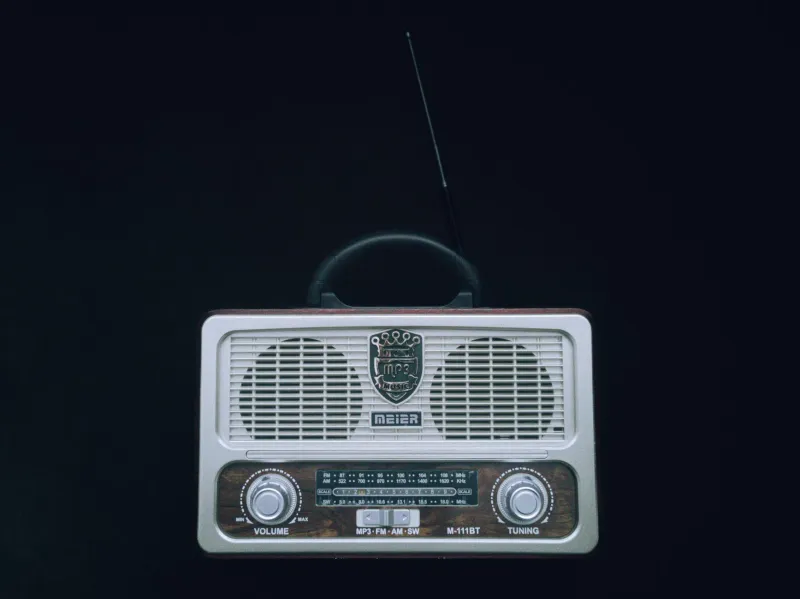
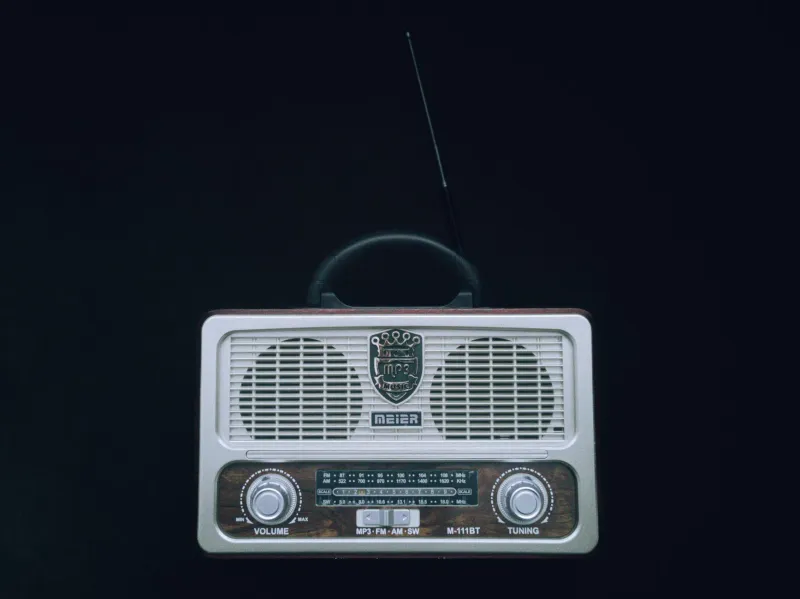
If this sounds like your kind of rabbit hole, the barrier to entry is low. A basic shortwave receiver — something in the $30-to-$150 range — will pick up most active stations. Software-defined radio setups, which run through a laptop and a cheap USB dongle, give you more flexibility and logging capability. The Priyom.org website maintains an active schedule of known stations with frequencies and times, updated by the monitoring community.
Expect a learning curve. Expect a lot of static. Expect to spend an evening listening to nothing and then, suddenly, hear a voice counting in a language you don't speak, on a frequency nobody's supposed to be using, and feel something you can't quite name.
That feeling is the whole point. Strange frequencies for curious minds — turns out, some of those frequencies are real, and they've been broadcasting longer than the internet has existed.