Dead Air Dealers: The Obsessive Archivists Keeping Forgotten Television Alive One VHS Tape at a Time
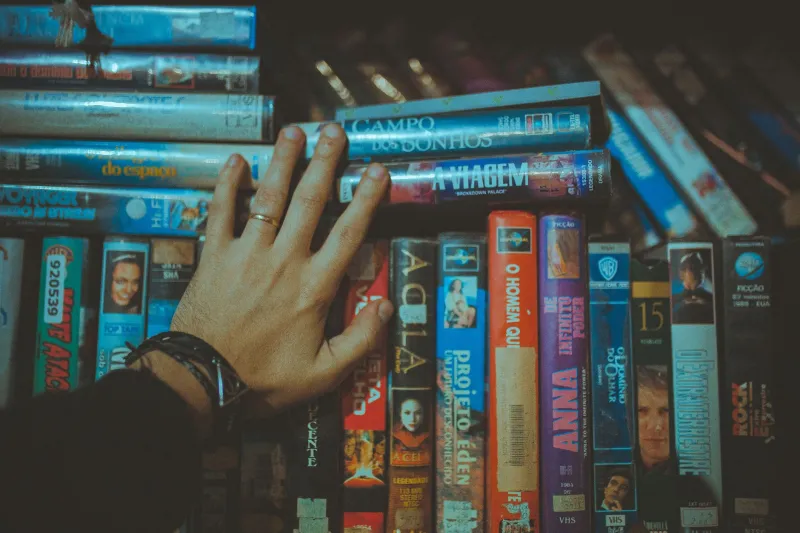
Somewhere in a climate-controlled basement, a guy named Derek is carefully digitizing a 1987 regional game show that aired exactly four times before the network pulled the plug. He doesn't work for a university. He has no institutional funding. He's just a person with a VHS deck, a capture card, and a deep, unshakeable conviction that this thing deserves to exist somewhere other than a landfill.
Derek is not alone. He's part of a loose, sprawling underground of people who've quietly decided that if the networks won't save their own history, then someone else has to.
What Gets Lost When Nobody's Looking
Television has always had a short memory. The major streaming platforms have trained audiences to think of TV as an infinite, well-curated library — but that illusion collapses fast when you go looking for something specific. Failed pilots from the late '70s. Local news magazine shows that ran on UHF affiliates in mid-sized markets. Saturday morning kids' programming that got yanked after sponsor complaints. Regional variety hours hosted by people who were almost famous.
Most of this stuff is just gone. Networks don't preserve what didn't perform. Physical archives deteriorate. Rights get tangled in legal knots that nobody wants to spend money untangling. The Library of Congress does what it can, but its television holdings are famously incomplete, shaped by what creators and rights holders chose to donate rather than any systematic effort at preservation.
The result is a Swiss cheese history of American broadcast culture — full of holes nobody notices until they go looking.
The Tape Traders
The people filling those holes operate through a network that looks, from the outside, almost comically analog. Private Discord servers. Password-protected forums. Direct messages between collectors who've built trust over years of careful trading. The currency is access — who has what, who's willing to dub a copy, who can be trusted not to sell what they've received.
The community traces its roots back to pre-internet tape trading circles, the same underground infrastructure that once kept bootleg concert recordings and foreign films circulating through American suburbs. The technology has evolved — tapes get digitized, files get shared through encrypted channels, metadata gets cataloged in spreadsheets of almost terrifying specificity — but the social logic is the same. You give what you have. You don't exploit the network. You protect your sources.
What they're building, piece by piece, is something the internet has otherwise failed to preserve: a working archive of television's weird margins.
The Legal Gray Zone
Nobody in this community is pretending the legal situation is clean. Most of what gets traded is technically under copyright. The networks still own the rights to content they have zero intention of releasing, which creates a situation these archivists find genuinely maddening — material locked behind intellectual property claims held by corporations that have forgotten the material exists.
The collectors tend to operate under an informal ethical framework that distinguishes between preservation and profit. Trading a digitized copy of an unaired pilot from 1994 within a closed community of enthusiasts feels different, morally, from selling bootlegs at a convention. Whether that distinction holds up legally is another question, and most of the people involved are careful not to find out.
Some have received cease-and-desist letters. A few have had YouTube channels taken down. The community absorbs these losses and continues, migrating to new platforms, tightening access controls, rebuilding what gets erased.
What They're Actually Saving
Spend any time in these communities and you start to understand the genuine cultural weight of what they're doing. The material they preserve isn't just curiosity-bait for nostalgia hunters — it's a record of how American culture actually looked and sounded in ways the official history doesn't capture.
Regional programming especially carries this kind of freight. A local talk show from Tulsa in 1983 isn't just a weird artifact — it's a document of how people in that place talked, what they cared about, what made them laugh. The national networks were always producing a version of America for America; local broadcast was America talking to itself.
Failed pilots are their own category of cultural document. They're records of what the industry thought audiences wanted, what creative swings got taken and abandoned, what the cultural conversation almost became. A pilot that didn't get picked up in 1979 tells you something real about 1979 that a show that ran for seven seasons doesn't.
The archivists know this. It's part of what drives them.
The YouTube Channels Living on Borrowed Time
The most visible layer of this world lives on YouTube, where a rotating cast of channels post clips, full episodes, and deep-dive commentary on rescued material. These channels operate with the full knowledge that their content can be claimed or removed at any moment, which gives them an odd energy — part enthusiast showcase, part race against the clock.
Some have built real audiences. A channel dedicated to unaired pilots has pulled in hundreds of thousands of views on individual videos. A guy who posts nothing but digitized local commercials from the '80s has a subscriber count that would make a mid-tier influencer jealous. The audience for this stuff is bigger than anyone expected, and it keeps growing.
The channel operators are careful — careful about what they post, careful about how they frame it, careful about which rights holders tend to be litigious and which ones have clearly stopped paying attention. It's an ongoing negotiation with an absent, indifferent industry.
The Frequency Nobody Broadcasts On
There's something that resonates here with the broader Nirgilis frequency — the idea that the most interesting stuff is always happening slightly off the main signal. The TV archivists aren't waiting for Netflix to greenlight a documentary about regional broadcast history. They're not petitioning the networks to release their archives. They're just doing the work, in basements and Discord servers and carefully maintained spreadsheets, because the work needs doing and nobody else is doing it.
The material they're saving will matter to historians who haven't been born yet. It will matter to filmmakers and writers and musicians looking for the texture of a specific American moment. It will matter to people who just want to find the thing they half-remember watching as a kid, the weird local show that nobody else seems to remember.
Derek's game show from 1987 is out there now, on a hard drive, properly cataloged, shared with people who care about it. That's not nothing. That's actually everything.