Wax and War: How Record Flipping Became the Most Ruthless Side Hustle Nobody's Talking About
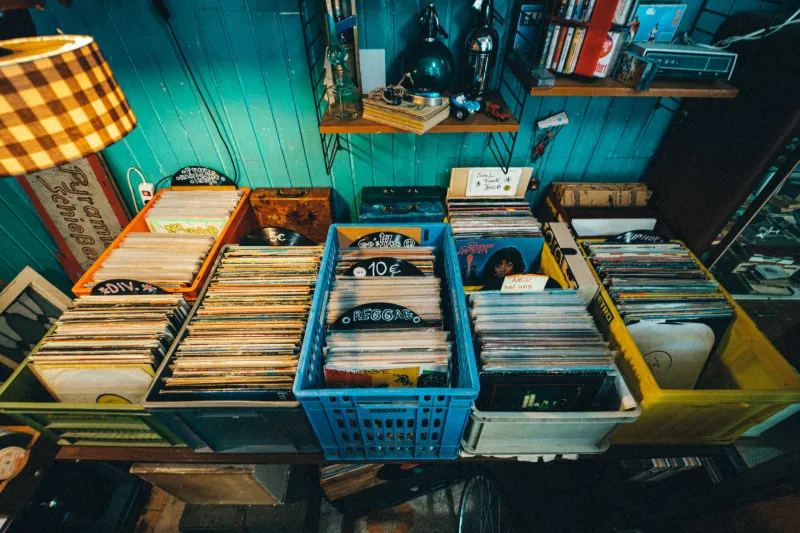
There's a particular kind of heartbreak that vinyl collectors know well. You walk into your neighborhood record shop on a Tuesday morning, coffee in hand, ready to dig. You're looking for nothing specific — maybe a clean copy of a Coltrane pressing, maybe something you've never heard of that just looks interesting. And then you notice the bins are weirdly thin. The good stuff is gone. Not browsed-through gone. Cleaned out gone.
Somewhere between the pandemic-era vinyl boom and right now, the crate-digging fantasy got complicated. Badly.
From Hobby to Hustle
Vinyl collecting has always had a speculative edge. People have been flipping records for decades — anyone who spent time on eBay in the early 2000s knows that a sealed original pressing of the right album could pay your rent. But what's happening now feels categorically different. The scale has changed. The tools have changed. And the culture around it has gotten genuinely hostile.
Discount bins at Goodwill used to be a gold mine for casual collectors. Now those same thrift stores have employees with smartphones scanning barcodes before anything hits the floor, checking Discogs prices in real time. Some locations have started pulling vinyl entirely from public sale, routing it through their own online storefronts instead. The treasure hunt isn't gone — it's just been automated by the people who got there first.
Discogs, the dominant marketplace for buying and selling records, has become the de facto pricing oracle for the whole ecosystem. A record's Discogs median sale price is now treated like a stock ticker by resellers. When a pressing spikes — say, because an artist died, or a song went viral on a TV show — flippers move fast. Within hours, copies that were priced at $15 are relisted at $80. Some sellers have scripts watching for exactly these moments.
The Discord War Room
If you want to understand where the real action is, you have to look at the Discord servers. There are private groups — some with hundreds of members, a few with waitlists — dedicated entirely to tracking record store inventory, flagging Discogs underpricing, and coordinating buys on limited pressings before they sell out publicly.
One collector in Chicago, who asked to stay anonymous, described joining one of these servers as "accidentally walking into a hedge fund meeting." Members share spreadsheets. They post photos of store shelves mid-browse. They alert each other when a shop updates its online inventory. "These guys aren't music fans," he said. "They're arbitrage traders who found out records have a higher vibe ceiling than crypto."
Record Store Day — once a genuine celebration of independent retail — has become a flashpoint. Limited pressings sell out in minutes, often to people who lined up with no intention of playing them. Secondary market prices for RSD exclusives can triple within the same afternoon. Shop owners have started implementing lottery systems and purchase limits, but enforcement is inconsistent and workarounds are easy to find.
The $3,000 Record Nobody Plays
At the higher end of the market, things get stranger. Original pressings of certain jazz, soul, and krautrock albums regularly sell for thousands of dollars. A clean original copy of a canonical jazz record on the right label can fetch anywhere from $1,500 to $10,000 depending on condition and pressing variant. Some of these are bought by genuine audiophiles who will actually put the needle down. Many are not.
The grading system on Discogs — Mint, Near Mint, Very Good Plus, and so on — has spawned its own cottage industry of disputes and manipulation. Sellers overgrade. Buyers argue in feedback threads. There are entire YouTube channels dedicated to teaching people how to spot a misgraded pressing. The community that built these standards is now partially drowning in the consequences of everyone learning to game them.
Long-time collectors describe a shift in what conversations at record fairs even sound like. "Ten years ago you'd talk about a record's sound, the pressing plant, what made it special," said one dealer who's been selling at fairs in the Pacific Northwest for over two decades. "Now half the conversations are about comps. What did it sell for last month. What's the trajectory." He paused. "It's exhausting."
The Newcomers Getting Squeezed
For people just getting into vinyl — and there are a lot of them, given that record sales have been climbing steadily for nearly two decades — the current environment is a rough welcome. Entry-level turntable setups are more affordable than ever, streaming has introduced younger listeners to deep catalog music, and the format genuinely sounds great. The appetite is real.
But the records that actually matter, the ones with history and sonic character, are increasingly out of reach. A 22-year-old in Nashville who got into vinyl during college described spending months trying to find an affordable original pressing of a particular soul record, only to watch every copy she found get bought and relisted at a markup before she could pull the trigger. "I ended up getting a reissue," she said. "Which sounds fine. But it's not the same thing and everyone knows it."
Reissue labels have stepped into this gap with varying degrees of success. Some put real care into replicating original mastering and pressing quality. Others are cash grabs on recognizable titles, pressed on substandard vinyl with artwork that looks like it was scanned from a water-damaged original. Knowing the difference requires exactly the kind of expertise that takes years to develop — and that gatekeeping, whether intentional or not, keeps newcomers at arm's length.
What Gets Lost
There's a philosophical argument buried under all of this about what records are actually for. The preservation instinct — the idea that keeping a fragile piece of cultural history in good condition matters — is real and worth respecting. Original pressings contain sonic information that later versions sometimes don't. The physical object carries context that a file can't replicate.
But preservation and speculation aren't the same thing, and the line between them is getting blurrier. A record sitting in a poly sleeve inside a climate-controlled closet, waiting for its Discogs price to peak, isn't being preserved. It's being warehoused.
The people who built vinyl culture — the obsessives who spent decades in the stacks, who learned to hear the difference between pressings by ear, who kept independent record shops alive through the lean years — didn't do it to create an arbitrage market. Most of them will tell you that. And most of them will also tell you they're not sure what to do about what it's become.
The frequencies are still there. The grooves still hold everything they always held. It's just getting harder to actually listen.